Calming Anxious Kids: Fast Tools, Routines, and Scripts
What anxiety can look like in children
Anxiety in kids often shows up less like “I’m anxious” and more like a body-and-behavior alarm. The goal isn’t to eliminate every worry—some caution is healthy—but to notice patterns early and respond with steady, teachable support.
- Common body signs: tense muscles, rapid breathing, headaches, stomachaches, nausea, frequent bathroom trips
- Common behavior signs: avoidance, reassurance-seeking, repeated “what if” questions, tearfulness, anger, perfectionism, shutdowns
- Common thinking signs: catastrophizing, rigid expectations, fear of mistakes, overestimating danger
- When it often spikes: bedtime, separations, school drop-off, changes in routine, loud environments, new social situations
If physical symptoms are frequent or intense, it can help to rule out medical causes with a pediatrician while also addressing stress and coping skills.
First, create a calm-and-safe baseline
When a child is anxious, the fastest path to calm is often co-regulation: your nervous system “lends” steadiness to theirs. Aim for safety cues first, then coaching.
- Co-regulate before correcting: lower your voice, soften your face, slow your movements, and reduce rapid-fire questions.
- Use brief validating phrases: “That felt scary,” “Your body is having a worry alarm,” “I’m here with you.”
- Check basics that intensify anxiety: hunger, thirst, fatigue, overstimulation, illness, sensory discomfort (scratchy tags, tight shoes, loud rooms).
- Reduce extra input: dim lights, lower noise, pause screens, and offer a quiet corner or cozy spot.
Once the intensity drops, your child can access the “thinking brain” again—then problem-solving becomes possible.
Quick calming techniques for the moment anxiety hits
These tools work best when you practice them during calm times, then “plug them in” when anxiety starts climbing. Pick one tool, try it for 60–90 seconds, and reassess.
- Breathing with a cue: “Smell the flower, blow the candle.” Encourage a slow inhale and a longer exhale.
- Grounding with senses: 5-4-3-2-1 (name 5 things seen, 4 felt, 3 heard, 2 smelled, 1 tasted).
- Progressive muscle “squeeze and release”: hands, shoulders, face, legs—pair with a slow count.
- Cold water reset: a cool washcloth on cheeks/eyes or sipping cold water (when appropriate and safe).
- Movement as medicine: wall push-ups, animal walks, jumping jacks, or a short walk outside.
- A simple script: Name it (“worry alarm”), Normalize it (“lots of kids feel this”), Next step (“one small brave step”).
| Situation | Try first | If it keeps rising | Goal phrase |
|---|---|---|---|
| School drop-off | 2-minute breathing + squeeze hands | Grounding: 5-4-3-2-1 in the car/at gate | “Brave step, then check-in after school.” |
| Bedtime worries | Predictable routine + worry time earlier | Body scan + dim light + comforting object | “Your job is resting; my job is watching.” |
| Public meltdown | Move to quieter spot + lower voice | Cold water + slow counting + pressure hug (if welcomed) | “Safe body first; we’ll talk after.” |
| Performance anxiety | Tiny practice + encouraging self-talk | Break task into 1-minute steps | “Try, then adjust.” |
| Separation anxiety | Short goodbye ritual | Transitional object + visual schedule | “Goodbye is quick; reunion is certain.” |
Mindful routines that reduce anxiety over time
In-the-moment calming is essential, but routines are what lower the baseline. Predictability tells a child’s brain, “You’re safe, and you know what’s next.”
- Daily predictable anchors: wake, meals, school prep, homework, play, bedtime.
- “Worry time” container: 10 minutes earlier in the day to draw or write worries, then close the notebook and move on.
- Mindful micro-practices: 30 seconds noticing feet on the floor, listening for 3 sounds, or slow sips of water.
- Sleep support: consistent bedtime, calming pre-sleep routine, limit scary media, keep the room cool and dark.
- Nutrition and movement: regular snacks, hydration, and daily physical activity to stabilize mood and energy.
For more background on child anxiety and signs to watch, see guidance from the American Academy of Pediatrics and the CDC.
Language that helps (and what to avoid)
Building coping skills: practice when calm
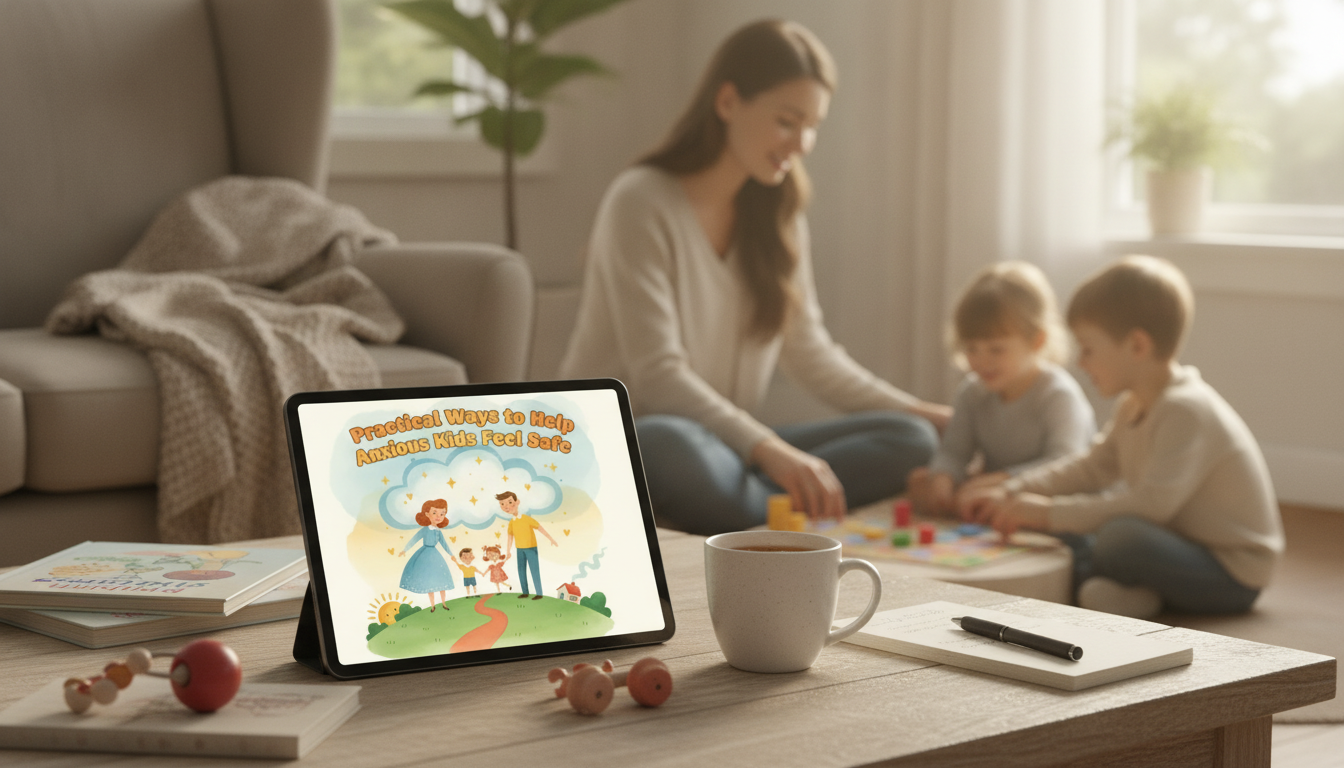
To make practice easier, a structured reference can help caregivers stay consistent. The Best Ways to Calm Anxious Children (Digital Guide) organizes gentle techniques, mindful routines, and ready-to-use scripts in one place.
When to get extra support
You can also review general mental health information from the American Psychological Association to better understand how anxiety works in the body and mind.
A guided approach for home and caregiving teams
- Use consistent steps across caregivers: recognize signs, co-regulate, pick one tool, debrief later, practice when calm.
- Keep routines realistic: aim for repeatable patterns rather than perfect schedules.
- Track triggers and helpers for two weeks: time of day, setting, sleep, food, transitions, sensory load.
- Use quick-reference resources: For a structured set of gentle techniques, mindful routines, and ready-to-use coping strategies, use the digital guide linked here for practice activities and scripts.
If family stress is contributing to the worry load (like budgeting for new baby needs or shifting expenses), having a clear plan can reduce adult stress that kids often sense. The Planning Monthly Baby Expenses Made Simple (Printable Budgeting Guide) can support calmer routines by reducing financial uncertainty and decision fatigue.
FAQ
What should be done first when a child is anxious and panicking?
Start with co-regulation: ensure safety, lower stimulation, validate the feeling briefly, and guide a slow, exhale-focused breathing pattern before asking questions or trying to solve the problem.
How can anxious kids be calmed at bedtime without endless reassurance?
Use a predictable wind-down routine and schedule “worry time” earlier in the day. Offer a short, consistent check-in script, then transition to a calming practice (like a body scan or breathing) and keep the goodnight ritual the same each night.
When is child anxiety serious enough to seek professional help?
Seek support when anxiety lasts for weeks and disrupts sleep, school, eating, or relationships, or when avoidance is escalating. Get urgent help if there are safety concerns, self-harm talk, or severe impairment.






Leave a comment