Silicone Baby Fork & Spoon Set: First Self-Feeding Guide
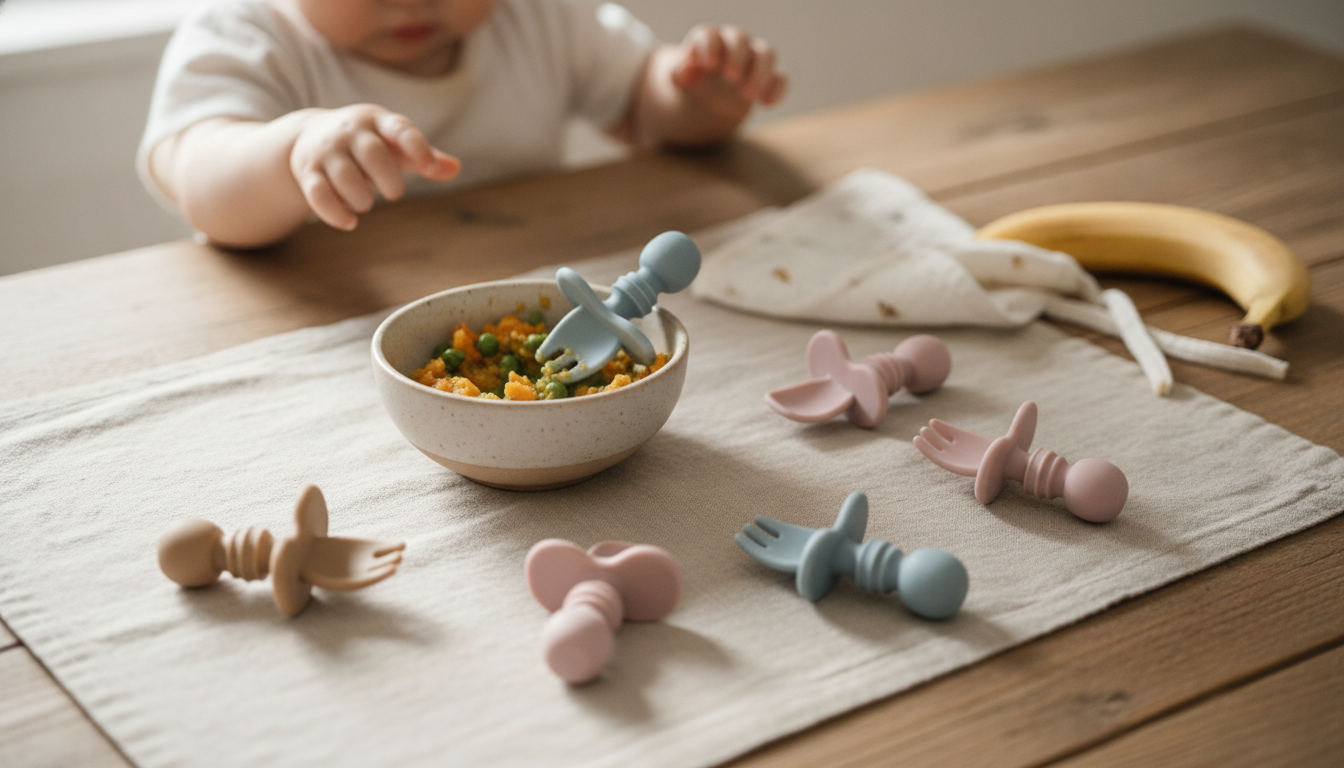
Silicone Baby Fork & Spoon Set for Early Self-Feeding
A baby fork and spoon set is often the first “real” utensil a child uses. Soft silicone tips can feel gentler on gums, while easy-grip handles help little hands practice scooping and stabbing soft foods. This guide covers what to look for, how to use utensils safely during early feeding, and how to keep them clean and long-lasting. For more guidance, see Silicone Grip, Self Feeding Training Utensils (Green Dinosaur).
What Makes a Good First Fork and Spoon
Early utensils work best when they support how babies actually learn: gripping first, then coordinating wrist and mouth movements later. A few design details can make day-to-day practice smoother. For further reading, see Personalized Name Food Grade 6pcs Baby Feeding Set with Spoon ….
- Soft, flexible tips that are comfortable for tender gums during teething and early meals
- A handle shape that supports a palmar grasp at first, then transitions to a more mature grip
- A shallow spoon bowl that makes it easier for beginners to keep food on the spoon
- Fork tines that are rounded and sized for soft foods (banana, avocado, steamed vegetables)
- One-piece or tightly bonded construction to reduce places where food residue can hide
- Non-slip texture to help prevent twisting or dropping during self-feeding practice
Silicone vs. Plastic vs. Stainless Steel: Quick Comparison
Material choice affects comfort, durability, and how a utensil feels in a baby’s mouth. Many families start with silicone and transition as skills and chewing habits change.
- Silicone is often chosen for early stages because it can be softer and less intimidating while learning
- Plastic utensils can be lightweight but may scratch over time; scratches can hold odors and residues
- Stainless steel is durable and common for older toddlers; some babies find it cold or hard early on
- The best choice depends on age, chewing habits, and whether the child tends to bite utensils
Utensil material comparison for early self-feeding
| Material | Pros | Considerations | Best for |
|---|---|---|---|
| Silicone | Gentle on gums; easy to grip; often dishwasher-safe | Can pick up odors if not cleaned well; may attract lint | Early self-feeding and teething phases |
| Plastic | Lightweight; affordable; many shapes | Can stain or scratch; quality varies | Occasional use and travel sets |
| Stainless steel | Very durable; resists staining; long-lasting | Harder feel; not ideal if a baby bites hard | Older toddlers with steadier utensil control |
When to Introduce Forks and Spoons
Utensil learning often starts around the same season of life as solid foods, but progress is rarely linear. Some days are all practice, other days are all play—and that’s normal.
- Many babies begin exploring utensils around the time solids are introduced; timing depends on readiness signs and caregiver guidance
- Early stages often involve holding a spoon while being fed, then trying to scoop with help
- Fork practice usually comes later than spoon practice and starts with soft, pierceable foods
- Supervision is essential; utensils are tools and should not be used for walking or playing
For broader feeding guidance and age-appropriate recommendations, visit HealthyChildren.org (American Academy of Pediatrics) on starting solid foods and the CDC’s Infant and Toddler Nutrition resources.
Safety and Comfort Checks Before Each Use
A quick once-over before meals helps keep utensil practice comfortable and low-stress.
- Inspect for tears, cracks, or loosened parts; replace if the surface is damaged
- Confirm the utensil size is appropriate—small enough to control, but not so small it becomes a choking hazard
- Avoid letting a child run, climb, or lie down with utensils in the mouth
- Choose age-appropriate foods: soft textures first, then gradually increase variety as skills improve
- If using with hot foods, test temperature first to avoid mouth burns
If you’re curious about how materials are evaluated for food contact, the FDA’s overview of food contact substances is a helpful reference point.
Cleaning and Care for Silicone Utensils
Silicone is generally easy to maintain, but it can hold onto smells if it isn’t rinsed and dried thoroughly. A consistent routine keeps the surface fresh.
Making Self-Feeding Less Messy (and More Successful)
Product Spotlight: Silicone Baby Fork & Spoon Set
If you’re setting up a simple utensil routine, the Silicone Baby Fork & Spoon Set is an easy two-piece option for early practice. It’s a practical fit for daily meals at home, and it also packs neatly into a diaper bag feeding kit for outings.
Helpful add-ons for a new-parent routine
- Planning Monthly Baby Expenses Made Simple (Printable Guide) for organizing essentials and keeping recurring costs predictable
- 2pc/set Wooden Baby Brush & Comb Set as a simple care item to round out a baby shower or “first-year basics” basket
FAQ
Are silicone forks and spoons safe for babies?
They can be a good early option when they’re used with close supervision, checked frequently for damage, and paired with age-appropriate foods. Any utensil should be treated as a feeding tool—not a toy—and replaced if it tears, cracks, or develops loose parts.
How do silicone utensils stop smelling like soap or food?
Rinse thoroughly, let them air-dry completely, and avoid storing them damp in sealed containers. If odors linger, soak in warm water with mild dish soap, rinse well, and dry fully; top-rack dishwasher washing can also help.
When should a baby start using a fork?
Forks often come after some comfort with spoons, starting with very soft, easy-to-pierce foods. Focus on readiness and safe supervision rather than a strict age, and keep practice short and calm.










Leave a comment