Teething Relief Toolkit: Safe Soothing Steps + Checklist
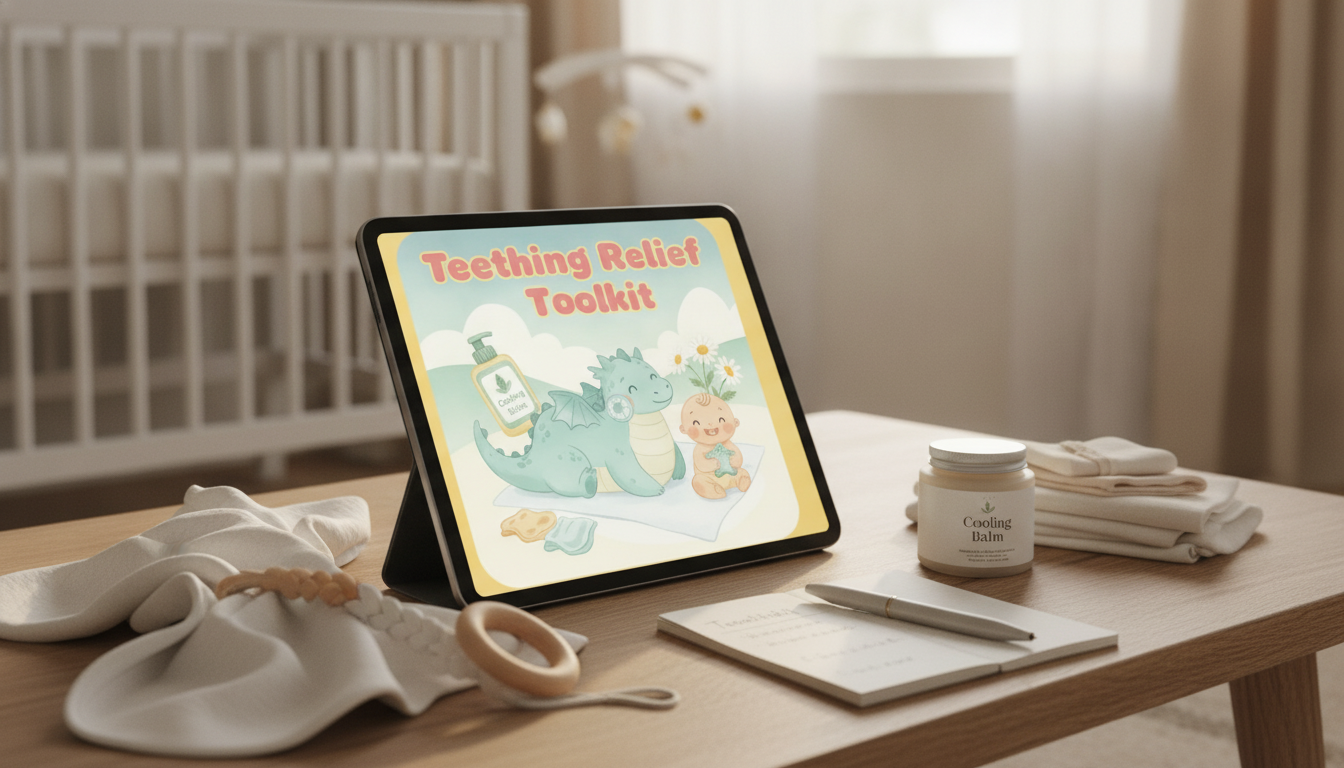
Teething Relief Toolkit: A Calm, Step-by-Step Guide With Soothing Tips and a Printable Checklist
Teething can bring drooling, gum discomfort, disrupted sleep, and extra fussiness—often all at once. When everyone’s tired, it helps to have a simple plan: know what’s normal, lean on safe comfort measures, and watch for signs that need a pediatrician. The Teething Relief Toolkit (digital download) is designed for new parents who want quick, practical steps and an easy checklist to keep on the fridge or tucked into a diaper bag.
What Teething Can Look Like (and What’s Usually Not Teething)
Teething symptoms can be surprisingly varied from baby to baby—and even from tooth to tooth. These are common, expected patterns:
- Increased drooling, chewing on hands or toys, and a strong urge to bite.
- Mild gum swelling or tenderness right where the tooth is pushing through.
- Irritability, clinginess, and disrupted naps or night waking.
Some babies tug at their ears or rub their cheeks because gum discomfort can “refer” pain to nearby areas. If the discomfort seems intense (or sleep suddenly gets much worse), consider true ear infection symptoms and check in with a clinician.
Teething may come with a slight temperature rise, but a true fever is not expected. Persistent fever, significant lethargy, or symptoms that are clearly worsening deserve a call.
Diarrhea, severe rash, or ongoing vomiting shouldn’t be brushed off as “just teething.” Treat these as separate concerns and contact a clinician if you’re unsure.
Timing also varies widely. Some babies show discomfort days before a tooth appears, while others seem barely bothered until you notice the new tooth during a smile.
The Toolkit at a Glance: What the Digital Download Helps Organize
When teething hits, the hardest part is often deciding what to try first—and remembering what worked last time. A printable, repeatable system can reduce guesswork.
- A quick-reference guide that separates “comfort measures” from “call the pediatrician” red flags.
- Soothing tips that can be mixed and matched for daytime play versus bedtime wind-down.
- A printable checklist to track what you tried, how baby responded, and what wasn’t worth repeating.
- A gentle routine framework to help caregivers stay consistent during fussy stretches.
- Notes space for patterns (for example, which teeth cause the most night disruption).
If you like having a tidy home setup for rough days, pair your printed pages with a small “teething basket” and keep it stocked the same way each week.
Safe, Practical Soothing Options (Fast to Try, Easy to Repeat)
Most teething comfort comes down to three ideas: cool pressure, calm input, and minimizing irritation from drool. These options are typically simple, quick, and easy to rotate.
Cool pressure
Offer a chilled (not frozen) teether. Cooling can help reduce gum inflammation and gives baby something safe to bite. Avoid anything frozen solid—very hard surfaces can be too intense for sensitive gums.
Clean finger gum rub
Wash your hands, then gently massage the gums for 1–2 minutes. Many babies calm quickly with steady, gentle pressure. You can repeat as needed, especially before naps or bedtime.
Cold washcloth chew (supervised)
Dampen a clean washcloth, chill it briefly, and let baby mouth it while you watch. It’s a low-cost option that’s easy to refresh, especially at home.
Distraction and movement
A short walk, a few minutes outside, or a change of scenery can dial down fussiness. Movement and fresh air won’t “fix” gum discomfort, but they can lower the intensity long enough for baby to reset.
Extra fluids + drool protection
Bedtime reset
Medication and Products: What to Use Carefully (and What to Avoid)
Some days, comfort measures aren’t enough. If you’re considering medication, follow pediatric guidance and use age-appropriate dosing tools—never exceed the label. For safety reminders and what’s discouraged, reputable resources include the American Academy of Pediatrics (HealthyChildren.org) and the U.S. Food & Drug Administration.
For a quick overview of common teething symptoms and safe ways to help, the NHS teething guidance is also a helpful reference.
Printable Checklist Routine: A Simple “Try–Observe–Adjust” System
Quick Comfort Plan (Copy to Your Fridge or Phone Notes)
| Situation | What to Try First | If Baby Still Fussy | Avoid |
|---|---|---|---|
| Drooling + chewing during play | Chilled teether for 2–5 min (supervised) | Cold washcloth chew + distraction | Frozen teethers; small parts |
| Gums look swollen; baby wants to bite | Clean finger gum massage 1–2 min | Short cuddle + offer fluids | Numbing gels without medical guidance |
| Bedtime discomfort | Dim lights + gum rub + calm routine | Brief walk/rocking, then back to routine | Overstimulating play right before sleep |
| Drool rash on chin/cheeks | Soft bib + gentle barrier on skin | Frequent pat-dry (no rubbing) | Fragranced products on irritated skin |
When to Call the Pediatrician
How to Get the Most From a Digital Download Toolkit
For practical add-ons that support calmer routines, consider the Wooden Baby Brush & Comb Set to gently tidy hair after drooly naps or outdoor walks, and keep your plan organized with the Teething Relief Toolkit (digital download) for quick, repeatable steps.
A Simple Home Setup for Teething Days
FAQ
What are the most common signs of teething?
Common signs include extra drooling, chewing on hands or toys, mild gum swelling or tenderness, fussiness, and disrupted sleep. High fever and severe illness symptoms aren’t typical and shouldn’t be assumed to be teething.
Can teething cause a fever or diarrhea?
A slight temperature rise can happen, but a true fever isn’t expected from teething alone. Ongoing diarrhea isn’t typical either, so monitor closely and contact a pediatrician if symptoms persist or feel concerning.
What are safe teething remedies to try at home?
Try a chilled (not frozen) teether, a gentle gum massage with a clean finger, or a briefly chilled washcloth for supervised chewing, along with comfort and hydration. Avoid teething necklaces, benzocaine gels, and teethers frozen hard.










Leave a comment